Vertical Video reveals the layered meaning of Paul Klee's iconic Angel
January 2026, interview
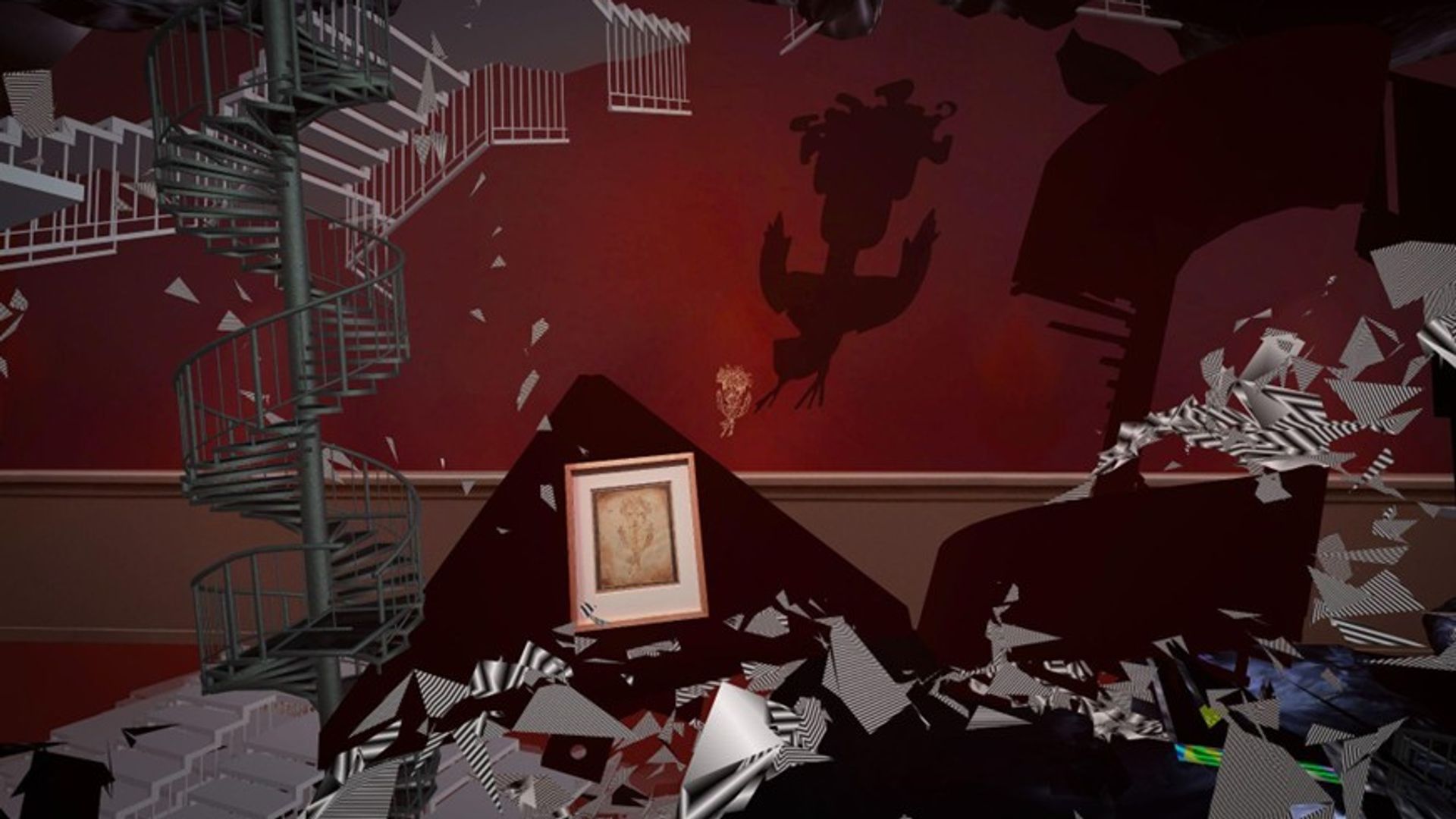
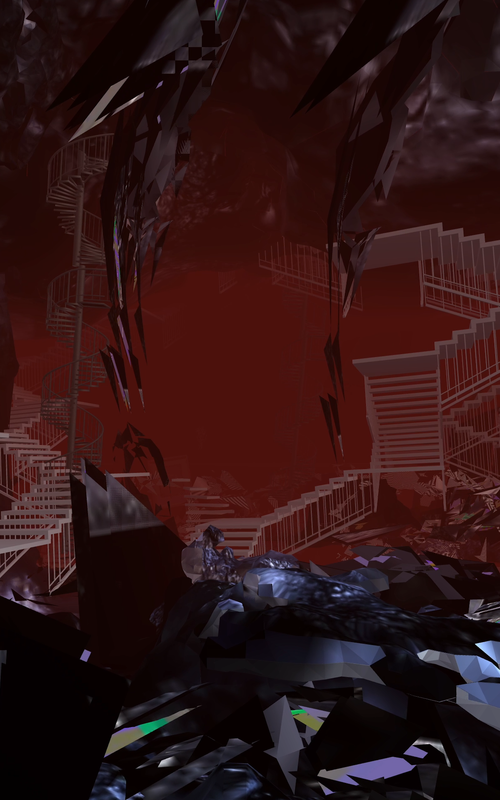
Every two months, Vertical Video presents a new video work in Amare’s public space. In January and February, the featured piece is ANGEL'S REMAINS. We asked the artist, Rosa Menkman, five questions to find out more about the piece.
From January to February, your video artwork will be on display in Amare. Can you tell us more about its meaning?
"The Angel has been a protagonist in my work for sixteen years, but I had never seen Paul Klee’s original monoprint in person. It is usually kept in the Israel Museum’s archive. This summer, when it was shown in Berlin, I finally locked eyes with it: an experience that touched me more than I expected.
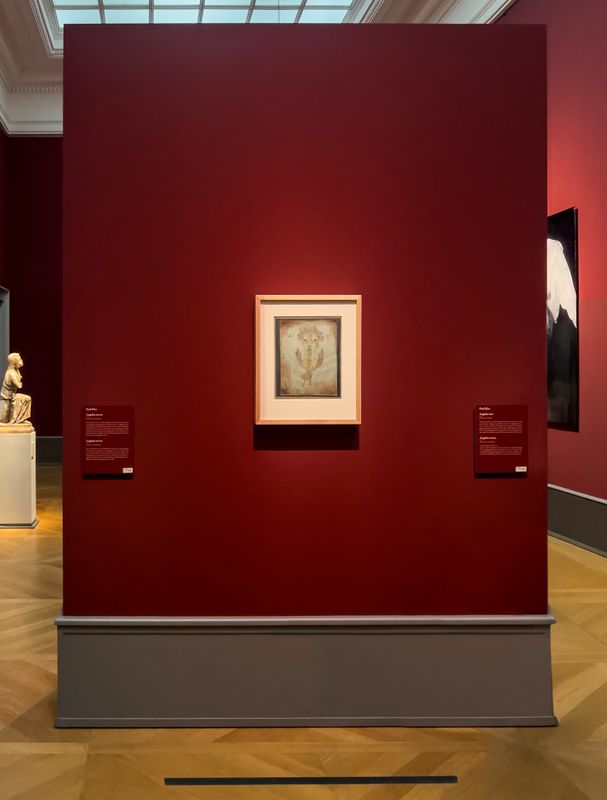
What I remember most is not the print, but the way its exhibition was staged. The Angel was mounted on a specially erected, giant burgundy-red wall, supported by oversized grey skirting boards that functioned almost as a second frame. A security guard stood next to the wall at all times, and the alarm was triggered easily (I accidentally set it off a few times). I think I may remember the scene more than the print itself.
The exhibition catalogue added to this explicit framing. In the catalogue, the Angel’s return to Berlin is directly linked to the sixtieth anniversary of diplomatic relations between Germany and Israel, positioning the image as a symbol for national politics. That framing matters.
In his 1940 Theses on the Philosophy of History, Walter Benjamin described the Angel as a force that interrupts progress. It insists on elevating the voices and stories written out of (national) histories. But in this reframing, it is recontextualized to look past any present, ongoing wreckage. Instead, it stabilizes a narrative of moral continuity, reconciliation, and forward motion. A type of contemporary operational historicism that neutralizes the Angel’s critical position.
In my video I tried to negotiate this problem: what happens when an image that intends to speak for those who were killed as a result of genocidal state violence, is co-opted to become a symbol of celebratory national politics. Can the Angel refuse this enclosure?"
Is there a connection between Amare and your artwork?
"There is no direct connection, but I hope the work contributes to a public debate on how images are mobilized, and how their power is visibly and invisibly instrumentalized in today’s political climate."
Can you tell us more about the creation process?
"I began with a question about framing. What happens when an image that already circulates is pulled back into the exhibition frame and presented as stable?
I started collecting contemporary sightings of the Angel online, including caricatures, tattoos, magnets, and memes. That circulation became my source material and my map of how the image gets repurposed.
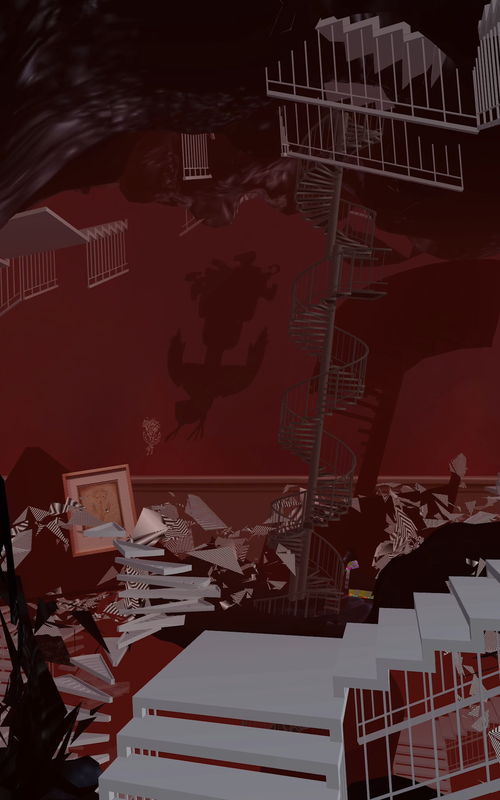
Then I moved into synthetic and generative image ecologies, where the Angel is no longer only a surface, but a layered object that can be rebuilt procedurally. I worked with a sculpted 3D model of the Angel. A 3D model is not an image yet. It becomes one through rendering, as separate layers of information are calculated and then composited into a single frame. I then extracted these layers as render passes, including a wireframe, a depth map, segmentation masks, and shadow passes, and ended up with a whole army of Angels. Presenting these layers separately lets the image stay unresolved and visibly constructed, rather than locked into a single authoritative version.
In the video edit, I reduced my army to three main anchors: the photograph of the Angel on display in Berlin, the 3D wireframe, and a baked shadow in flight. Together they show the image moving between exhibition, computation, and circulation. In short, my process mirrors my argument: the Angel cannot be pinned down as one stable picture. It is an unstable object shaped by rendering, reposting, and the conditions of display."
What else do you do as an artist and where does your inspiration come from?
"I make research-based artworks about how images are produced, standardized, and governed. Depending on the project, that becomes video, installation, print, and more recently 3D and synthetic image workflows. I often start from moments where images fail or reveal their own limits, compression artefacts, calibration bias, broken formats, and the way platforms and interfaces reshape what becomes visible or believable.
My focus on resolution grew out of the im/possible images research I began after winning the Collide Arts at CERN Barcelona award. At CERN, I interviewed scientists about the images they would make if there were no limits. That question made it impossible for me to treat resolution as a neutral technical setting. Resolution always implies trade-offs. When one part of an image becomes sharper, something else gets simplified, blurred, dropped, or made harder to name. I try to make those choices legible, so we can argue about them, instead of accepting them as default."
What do you hope passers-by and visitors take away from your video artwork?
"An encounter with an image today is more than meeting its surface, the layer we are conditioned to see and read. Images are layered, complex, non-static objects. I hope that the installation opens a window into that way of thinking about images.
And, on a more personal level, I hope it helps the Angel to slip free."
Discover more about Rosa and about Vertical Video.

More Amare Stories