

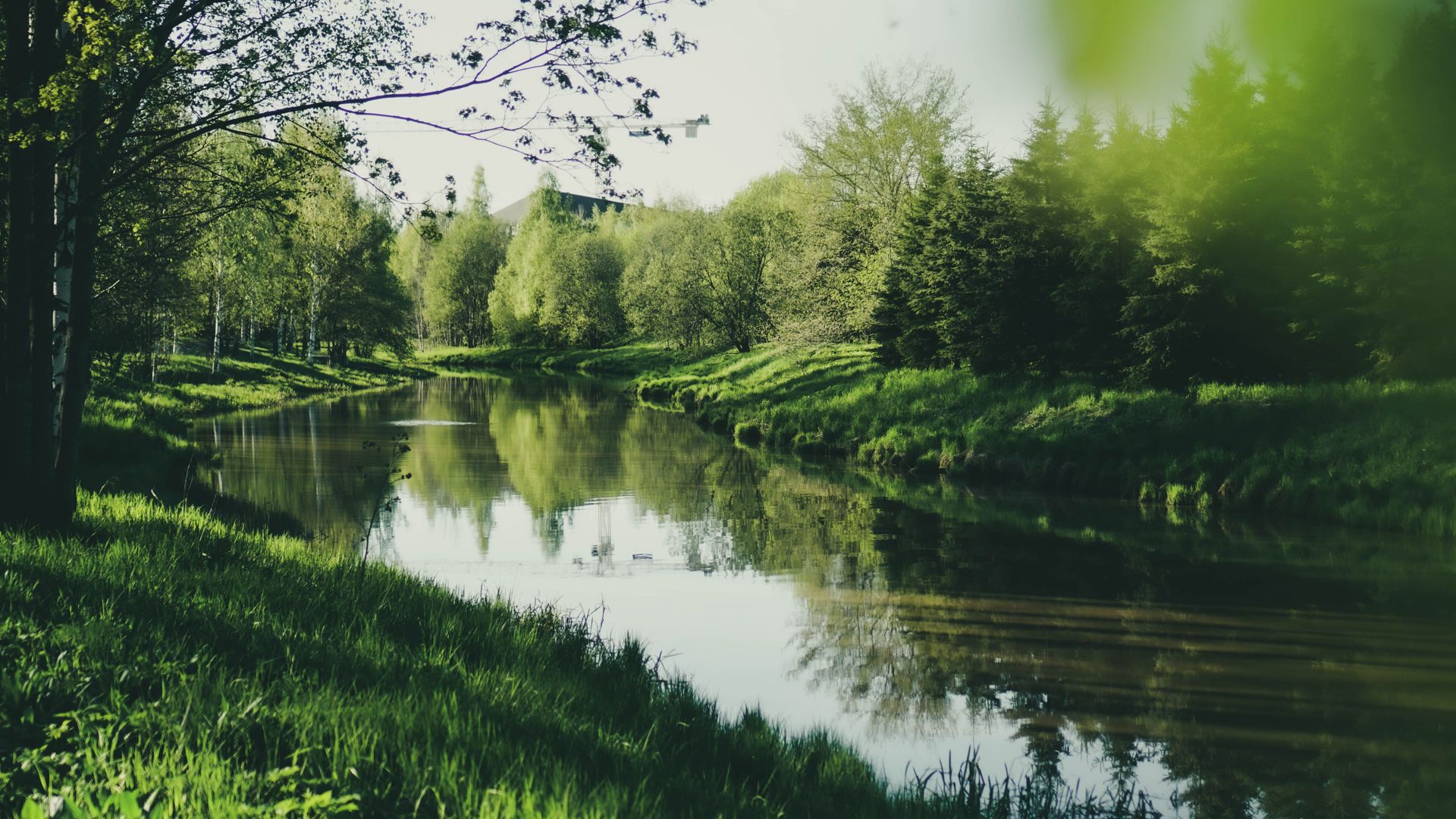
Beyond human thinking: Who speaks for the river?
-
Mon 26 Oct ’2619:00 - 21:00Spinozafoyer
Rivers, soil life, animals, algorithms, and robots are not outside of us. They are part of the world we live in and also challenge us to rethink voice, responsibility, and power. The same goes for marginalized groups like Indigenous communities and people with a refugee background. Because who gets to have a say about the future? And who or what do we include in our ethical choices?
Tonight, the special issue ‘Beyond Humans as the Measure’ from Beleid & Maatschappij (Boom) is being launched. It's an invitation to explore together what happens when we shift our view of humans from 'the autonomous person' to humans as part of a larger, living network.
Join us for an inspiring and interactive evening with film and discussion about the possible futures that lie ahead. You’ll also get a free physical copy of the special issue Beyond Humans as the Measure. Great to read more at home, or to continue the conversation with friends and acquaintances.
Credits
Saskia Ruijsink is a dedicated academic professional with expertise in spatial planning and strategy development, justice, sustainability in urban and spatial development, participation, co-creation, and transdisciplinary work. She has over 20 years of experience as a researcher, teacher, advisor, and trainer of professionals both in the Netherlands and abroad. Currently, she is completing her PhD research, in which she investigates how more-than-human spatial planning can contribute to transformative change for greater justice and sustainability.
Miranda Lakerveld is the founder and artistic director of World Opera Lab, where she creates intercultural operas that challenge colonial paradigms and explore 'more-than-human' perspectives. In her work, natural elements like plants, water, and ecosystems possess their own agency and consciousness. Lakerveld believes that world traditions where mythology, music, and movement come together are testimonies of millennia-long cultural exchanges, the search for justice, dialogue between spiritual traditions, community spirit, creativity, and deeply rooted spiritual beliefs. Many stories and rituals give a voice to nature in this context. She regularly collaborates with spiritual leaders, artists, and musicians from different traditions to reconstruct these stories, music, and rituals and connect them to our time, as in her recent work Ring of our Time about resource extraction. Her work is inspired by thinkers like Amitav Ghosh and Anna Tsing, who challenge the colonial view of a dead nature.
Clemens Driessen is fascinated by the relationships between people, animals, and their environment. He explores how these relationships change under the influence of new technology. In his work, he combines philosophy, historical research, and diverse ethnography, taking animals, plants, and other beings seriously as active participants in cultural change. He collaborates with designers and artists on surprising situations and physical thought experiments. He has published on topics like pig apartment buildings, lab-grown meat, the Oostvaardersplassen nature reserve, gaming with pigs, fish welfare, milking robots, and farmers' moral experiences. He is a cultural geographer at Wageningen University, where he teaches philosophy of science, ethics, innovation, and interactions between art and science. Together with Henriette Waal, he published 'Water Works: Ecosocial Design' (Valiz 2025).
Moderators
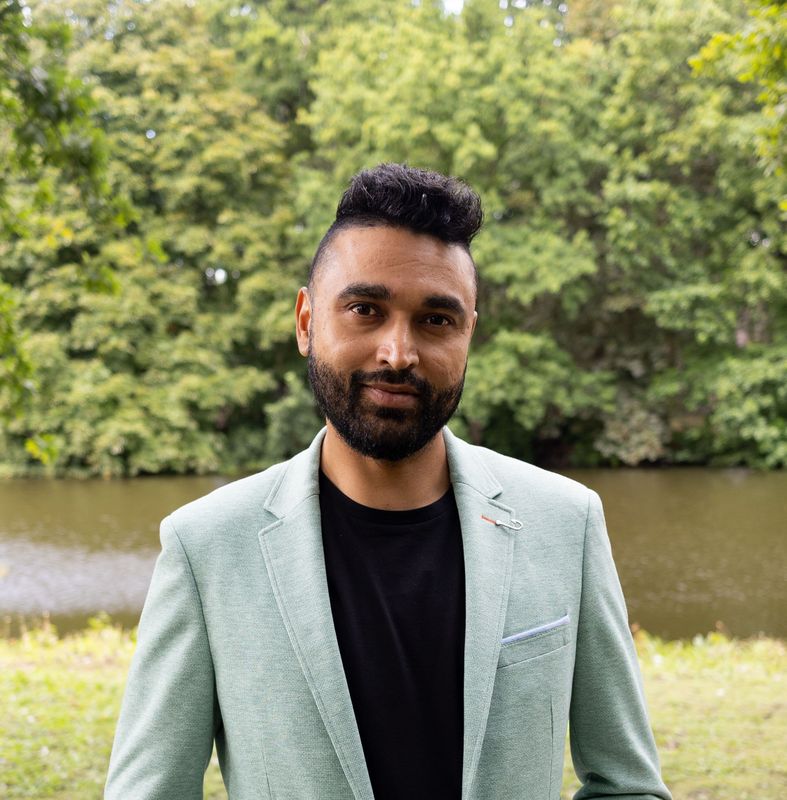
Shivant Jhagroe is a public administration scholar, writer, and musician. His work focuses on ecological justice, coloniality, and the power of grassroots resistance. He serves on the editorial board of the journal *Beleid en Maatschappij* and works as an assistant professor at Leiden University. Through his research, he develops perspectives for an 'eco-just society' centered on caring relationships with the Earth and one another. Additionally, he composes and produces music as part of the decolonial art collective CTRL+ALT+.
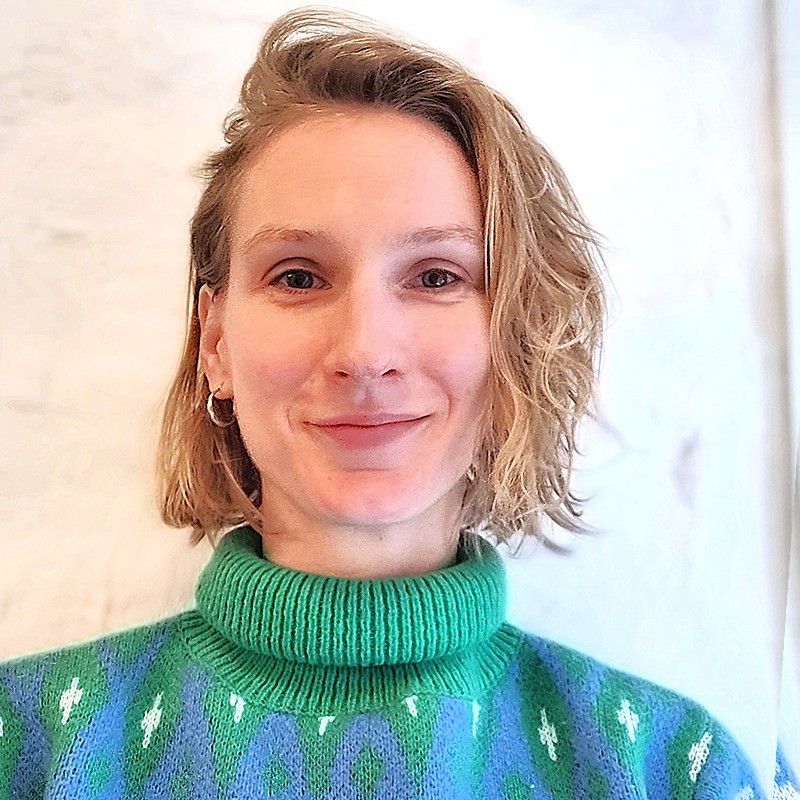
More-than-human geographer, STS researcher, and practicing composter Marieke Meesters is fascinated by the material aspects of human bodies. She investigates, often through action- and art-based research, how human bodies and excretions (especially poop and pee) are part of more-than-human metabolisms. With a broader interest in the entanglement of humans in ecosystems, she has previously explored how non-humans can participate in knowledge production and practices around mining.