Organ and Orchestra: Conflict and Dialogue

Francesca Ajossa with Soundwave Collective & Libia Hernandez
Wed 4 Nov / 20:15
Wed 4 Nov ’26
20:15
  • Wed 4 Nov ’26
    20:15
    Nieuwe Kerk, The Hague

Accompaniment, dialogue and imitation: the relationship between organ and orchestra is remarkably rich. Historically, the organ functioned as the foundation and binding force in continuo playing, as a dialogue partner in concertos, and even as a substitute for the orchestra in later symphonic organ repertoire. This programme explores that multifaceted collaboration through repertoire for organ and strings, adding a third voice to the conversation: percussion.

Programme

Johann Sebastian Bach Fantasie en Fuga in g-klein, BWV 542
Elliott Carter Saëta, uit: Eight Pieces for Four Timpani
Jorge Amado La danza de los fugitivos
Anton Heiller anz-Toccata
Francis Poulenc Concerto pour orgue, cordes et timbales en sol mineur, FP 93

Organ, strings, and timpani: who will win the battle?

This program brings three distinct sound worlds into confrontation: organ, strings, and timpani. Initially, they present themselves separately. Gradually, rhythm, movement, and virtuosity come to the forefront, until the different forces converge in Poulenc's Concerto pour orgue, cordes et timbales.

The program opens with Johann Sebastian Bach's Fantasy and Fugue in G minor, BWV 542. The free, dramatic Fantasy and the much more strictly structured Fugue showcase two faces of the same instrument, which here sounds in all its glory.

Next, the focus radically shifts to the timpani. Elliott Carter's Saëta, from his Eight Pieces for Four Timpani, derives its name from an Andalusian singing tradition with an improvisational character. Carter translates that freedom into an extremely refined play with rhythm and tempo, in which the timpani present themselves as a fully-fledged soloist.

With Jorge Amado's La danza de los fugitivos, movement then takes center stage. The idea of dance continues after the break in Anton Heiller's Tanz-Toccata, where virtuosity and a pronounced rhythmic character constantly drive each other. After Carter's timpani solo, it seems that the organ is also swept along by rhythm and dance: the monumental instrument suddenly becomes physical, mobile, and almost percussive.

All these lines ultimately come together in Francis Poulenc's Concerto pour orgue, cordes et timbales en sol mineur. Here, the organ is no longer alone. Against its massive sound, Poulenc places the warmth of the strings. The relationships change constantly: sometimes the organ dominates, then the strings take the initiative, while the timpani reinforce the confrontation or announce a new turn. At the same time, Poulenc harkens back to the world with which the program began: the dramatic opening of his concerto explicitly evokes the organ music of Bach.

Cloakroom and drink  
Cloakroom and an intermission drink are included. If the event does not have an intermission, you will receive the drink afterwards.  

Ooievaarspas discount  
Ooievaarspas holders are eligible for a discount on the ticket price for this concert. To book tickets, we need to see your Ooievaarspas for registration purposes. Please contact our booking office to book your tickets.  

Credits

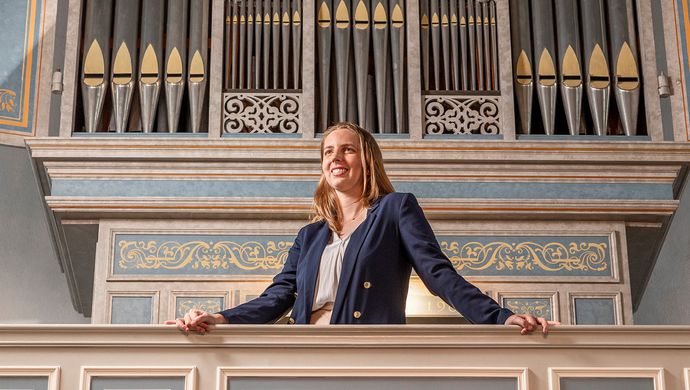
Francesca Ajossa organ
Soundwave Collective
Libia Hernandez
conductor
Waiting list

Wishlist

Added:

To wishlist